Blog How Many Wristbands Does Your Event Really Need? Avoid Shortages, Delays, and Entry Chaos
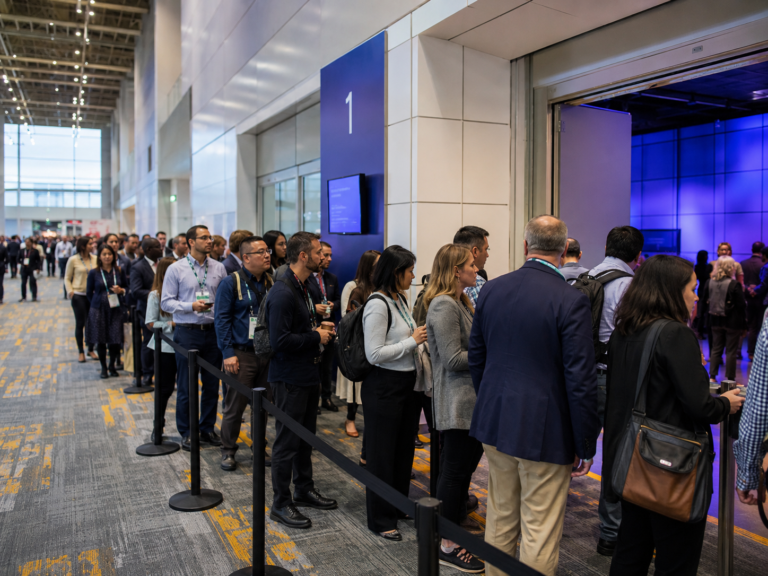
Wristband quantity matters for event success because accurate numbers prevent gate bottlenecks and ensure staff can instantly verify guest access. Having the exact amount keeps your entry flow moving smoothly from the moment the doors open.
If your gate staff have to hunt for the right VIP passes because you ran short, the queue will back up into the street in minutes. Accurate wristband quantity planning supports effective crowd control. A simple glance at a bright band provides instant guest verification, allowing your team to wave people through quickly.
Shortages disrupt entry, create congestion, and frustrate guests. That is why buffer stock planning is an essential part of capacity planning. This guide will show you how to use event logistics to calculate exact numbers for different access zones, ensuring total operational efficiency.

Figuring out your baseline wristband quantity starts with your expected attendance, but you also need to add planned allocations for staff and volunteers. This core number ensures you have enough bands for every operational role.
Confirmed ticket sales and RSVPs influence baseline wristband counts by setting the absolute minimum number of guests you need to accommodate. If you pre-sold 500 tickets for a local craft fair, that is your exact starting point. Good attendance forecasting uses these solid numbers to predict walk-up sales accurately.
You must also look at specific event type considerations. A free community festival will always have a higher walk-up rate than a paid indoor conference, which naturally changes your headcount estimation.
Ordering separate staff and volunteer wristbands establishes clear access classification for your security team. Imagine running a busy high school sports tournament. If the umpires, the catering crew, and the parents in the stands all wear the exact same colour, keeping the field clear becomes a nightmare.
Setting specific access tier allocations early keeps restricted areas secure. Planners use digital planning tools to calculate the total inventory needed across every group. A simple spreadsheet can track these numbers easily. Getting this wristband inventory planning right on screen prevents last-minute panic at the gates.
You always need a buffer wristband quantity to act as contingency stock for unexpected walk-ups. Planners include buffer stock when estimating wristband quantities to absorb attendance variability safely. If you only order exact numbers based on early ticket sales, you will almost certainly run short.
Unexpected factors increase wristband needs on event day through accidental wristband loss and damage. Even durable bands can break if a guest puts them on incorrectly. Keeping replacement wristbands at the front desk handles these event-day adjustments quickly. This is exactly why a wristband buffer matters for keeping the entry line moving.
Application errors are one of the biggest hidden drivers of your buffer number, and the reason comes down to how a Tyvek wristband is built: for single use only. The wearer also cannot remove and refit the band, and that is intentional: it is a tamper-resistant design that stops bands being passed between people, but it also means every fitting attempt counts. If a wristband is applied too tightly, too loosely or at an awkward angle, it has already been used. Staff must cut it off and start again with a fresh band. The same principle applies to woven fabric wristbands with 16-tooth high-security plastic locks. Once the lock has been secured or the band has been cut, it cannot be issued again.
Although one-size-fits-all wristbands are adjustable, staff should pause before securing them at both ends of the size range. Small children’s wrists at school carnivals need particular care, as do larger wrists. New volunteers also tend to make more fitting mistakes at the beginning of a shift, so replacement use may be highest during the first busy hour.
Your buffer is therefore not just for extra people. It also needs to cover extra application attempts. Sharing this Tyvek wristband application guide with gate staff before opening can reduce avoidable waste.
Staff and volunteer allocations require their own buffer calculations to cover shift changes and temporary workers. During a weekend music festival, catering and security crews often swap out. A sunny morning for a local charity run also brings extra walk-up sales. Proper wristband buffer planning means you capture those sales instead of turning people away.
Recommended buffer stock for events typically ranges from five to fifteen percent. A five percent wristband quantity buffer percentage works perfectly for small, private workshops. However, for a large outdoor concert, a ten to fifteen percent margin is much safer. Good wristband stock planning for events guarantees you are ready for anything.

Learn more about Tyvek wristbands and why they remain a practical choice for managing guest access, crowd flow, and event identification.
Good entry flow planning helps you figure out the exact wristband distribution quantities needed at every gate. Wristband check-in processes affect event entry flow by deciding how fast guests move from the ticket scanner to the main floor.
If you have four entrance lanes, you must divide your inventory correctly among them. You do not want one lane running out of general admission bands while the others have full boxes. This directly links your operational flow to your ordering decisions.
Common bottlenecks at distribution points usually happen when staff run out of specific colours. Planners estimate throughput rates and staffing needs by timing a single transaction. If a volunteer secures two bands per minute, you know exactly how many bands that specific lane needs per hour. This check-in time management prevents severe queue congestion.
Technology like RFID speeds up the entry process significantly. Technology-driven check-in allows staff to scan guests with a quick tap, improving guest throughput immensely. When using smart bands, entry flow optimisation becomes much easier. You can use data-driven planning to track exactly when your largest crowds arrive.
Queue management relies heavily on matching your supplies to your processing speeds. When you understand your wristband check-in throughput, you know exactly how many physical bands to place at each station. Implementing these queue efficiency strategies eliminates operational bottlenecks before the gates open.
Deciding on your access level identification early helps you calculate the exact quantities required for each group. Planners must estimate counts by colour and access level before ordering to avoid dangerous shortages in restricted zones.
If you order a flat 1,000 bands for a food festival but forget to separate VIPs from general admission, your visual identification planning falls apart entirely. Colour-coded wristbands instantly tell security who belongs in the beer garden and who stays in the family zone, making access control segmentation simple.
Choosing advanced features changes how you manage your inventory. Barcode and QR wristband planning directly impacts your numbers because these items link to specific digital tickets. You only order these for guests needing scanned entry. Similarly, required RFID wristband quantities depend entirely on how many attendees actually need multi-day digital access.
You do not need smart bands for everyone. A good wristband allocation strategy might use RFID wristband technology for weekend VIPs, while relying on basic bands for single-day visitors. This mixed approach to technology-driven access keeps your scanning and throughput incredibly efficient while saving money.
Planners use their event access structure to calculate totals by mapping out every single door. This tells you exactly how to order wristbands by access level. Combining barcode wristband technology or QR code wristband technology with standard visual bands helps you match the right tool to the right crowd. Choosing wristband tech for events this way ensures total accuracy.
Strict venue capacity planning sets a hard ceiling on your maximum wristband quantities. If your local town hall holds exactly 400 people, your capacity-based wristband planning stops right there. Ordering 500 bands for a 400-person space creates safety risks and wastes your budget.
Security access control requires specific wristband volumes to maintain safe zones across your entire venue. Good event security wristband practices separate crowds by age or ticket type. Giving a neon pink band to guests over 18 keeps the alcohol tent secure. This visual system supports emergency access planning by showing security instantly who belongs in restricted areas.
Crowd flow management relies on distinct wristband colours to direct attendees quickly. Using bright bands allows gate staff to perform fast access verification techniques without stopping every person to read a printed ticket. These crowd flow wristband strategies act as highly effective queue congestion solutions.
Planners align wristband orders with staffing strategies because entry throughput analysis shows exactly when big crowds will arrive. By studying peak arrival patterns, you can send the most stock to your busiest gates. A solid wristband allocation strategy matches your supplies to real conditions, keeping throughput and wristband numbers perfectly balanced.
When tackling small event wristband planning, start with a baseline count and add a standard buffer. If you are wondering how many wristbands for 100 attendees you need, the math is very straightforward.
For an intimate community workshop, your event planning calculations stay simple. You might order 110 general admission bands to cover late arrivals, plus 10 different coloured bands for staff and speakers. This covers your baseline and leaves room for proper buffer and contingency planning.
When asking how many wristbands for 500 attendees, you must factor in different guest types. Medium event wristband planning introduces a clear access tier breakdown.
For a regional food festival of 500 people, you might need 400 general admission bands and 50 VIP bands for sponsors. You will also need 50 staff bands. Apply a 10 percent buffer allocation estimate to each group, and your final order will sit comfortably around 550 total bands.
Figuring out how many wristbands for 2,000 attendees requires strict access group allocation. Large event wristband planning for a busy music festival needs careful separation.
You might need 1,500 general admission passes, 300 VIP weekend passes, and 200 staff bands. A 15 percent buffer is crucial here because bigger crowds bring unpredictable walk-up sales. These wristband quantity examples show how a large gathering easily scales up to about 2,300 total units. By adjusting your percentages based on your crowd, scaling wristband orders becomes a very simple exercise.
Most experienced organisers do not wait for final ticket sales before ordering wristbands. They estimate attendance, allow for staff and access groups, then round the total up to a practical quantity, avoiding a late scramble when attendance changes.
Repeat customers often make the process even simpler. If they know the usual turnout for an annual event, they may add a flat 200 wristbands to their normal order rather than calculate a new percentage each year, since it is quick, easy to communicate and based on what has worked across several events.
Orders also tend to cluster around quantities such as 200, 500 and 1,000 because wristbands are supplied in set pack sizes. Rounding up to the next pack may add very little to the total cost. A box of spare bands costs far less than a gate that stops moving because staff have run out.
Artwork affects the risk of ordering extra. Plain wristbands or custom designs without a date can often be stored for use next year. If your event repeats, choosing reusable wording makes it safer to round up and carry any unopened stock forward.

If you are comparing wristband options, learn why Tyvek continues to be one of the most popular choices for Australian events.
Before you finalise your wristband order specifications, carefully review your quantities and colours. Planners finalise these details by checking their segmented lists one last time. This is a critical step in bulk order planning. A simple mistake here can leave your VIP guests wearing the same colour as general admission. Double-checking your numbers forms the foundation of a reliable wristband ordering guide.
Lead time considerations determine exactly when you must place your final order. Production turnaround time varies heavily depending on what you buy. Plain stock bands might ship the same day, but custom print lead times often take a week or more. If you are adding a school logo for a sports carnival, you must factor in this extra printing time.
Supplier selection tips focus on finding partners with clear communication and proven reliability. Choosing wristband suppliers who offer transparent shipment scheduling keeps your stress levels low. You want a team that responds quickly when you need to approve digital proofs. Knowing your supplier has reliable rush shipping options makes fast shipping wristband orders much more predictable.
Order confirmation practices lock in the official agreement between your team and the manufacturer. Bulk wristband purchase tips always recommend keeping a clear paper trail of these final approvals. Many schools use formal purchase orders to handle this step easily. Understanding these lead times for wristband orders ensures your delivery arrives well before the gates open.
Accurate numbers always start with your baseline headcount. Proper wristband quantity planning relies on grouping your guests and staff correctly early on. This access level allocation ensures every single person gets the right pass. Always include buffer and contingency estimates to cover late ticket sales. This event wristband planning summary keeps your inventory perfectly balanced.
Planners translate planning principles into final order quantities by matching supplies directly to entry gates. A quick access and crowd flow summary shows that having the right colours at the right doors stops bottlenecks. Use these final wristband quantity tips to segment your crowds intelligently. These practical event planning steps make gate management stress-free.
Coordinating with suppliers early is critical for event success because custom designs take time. Good supplier lead time planning guarantees your boxes arrive well before your gathering begins. During your order finalisation process, double-check your totals. Use basic supplier communication tips to confirm your exact delivery schedule.
Practical steps planners take next include building a quick order preparation checklist. Once your numbers are mapped out, use this event wristband procurement guide to lock in your wristband planning next steps. If you need help calculating your exact totals or want expert advice on fast order fulfilment, our team is ready to help. Call us on 08 8363 4850 or email [email protected].
Good entry flow planning helps you figure out the exact wristband distribution quantities needed at every gate. Wristband check-in processes affect event entry flow by deciding how fast guests move from the ticket scanner to the main floor.
If you have four entrance lanes, you must divide your inventory correctly among them. You do not want one lane running out of general admission bands while the others have full boxes. This directly links your operational flow to your ordering decisions.
Common bottlenecks at distribution points usually happen when staff run out of specific colours. Planners estimate throughput rates and staffing needs by timing a single transaction. If a volunteer secures two bands per minute, you know exactly how many bands that specific lane needs per hour. This check-in time management prevents severe queue congestion.
Technology like RFID speeds up the entry process significantly. Technology-driven check-in allows staff to scan guests with a quick tap, improving guest throughput immensely. When using smart bands, entry flow optimisation becomes much easier. You can use data-driven planning to track exactly when your largest crowds arrive.
Queue management relies heavily on matching your supplies to your processing speeds. When you understand your wristband check-in throughput, you know exactly how many physical bands to place at each station. Implementing these queue efficiency strategies eliminates operational bottlenecks before the gates open.
Need Help Calculating Wristband Quantities? Get expert advice before placing your wristband order.