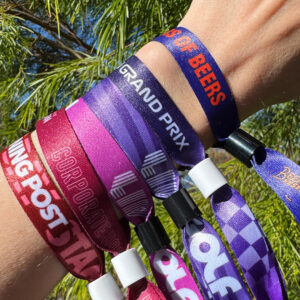
Blog Why More Schools and Event Organisers Are Using Emergency Wristbands for Kids
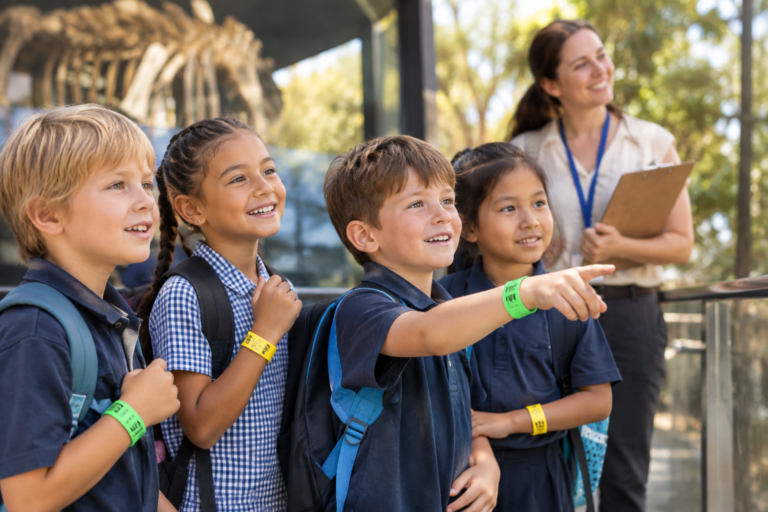
Emergency wristbands help schools and event organisers improve child safety by making medical needs, emergency contacts and identification details easier to access during excursions, camps and public events, while supporting faster reunification when children become separated.
Wristbands improve child safety and emergency communication during excursions and events by providing fast access to medical information, emergency contacts, and identification details that help supervising adults respond quickly.
Medical alert wristbands can communicate allergies or existing health conditions, emergency contact wristbands can help reunite separated children with their families, and QR code wristbands can provide additional information, which can be protected or access-controlled depending on the system used.
Together, these emergency identification systems strengthen practical child safety systems, improve duty of care procedures and aid supervision during school excursions, sporting activities, and public events.
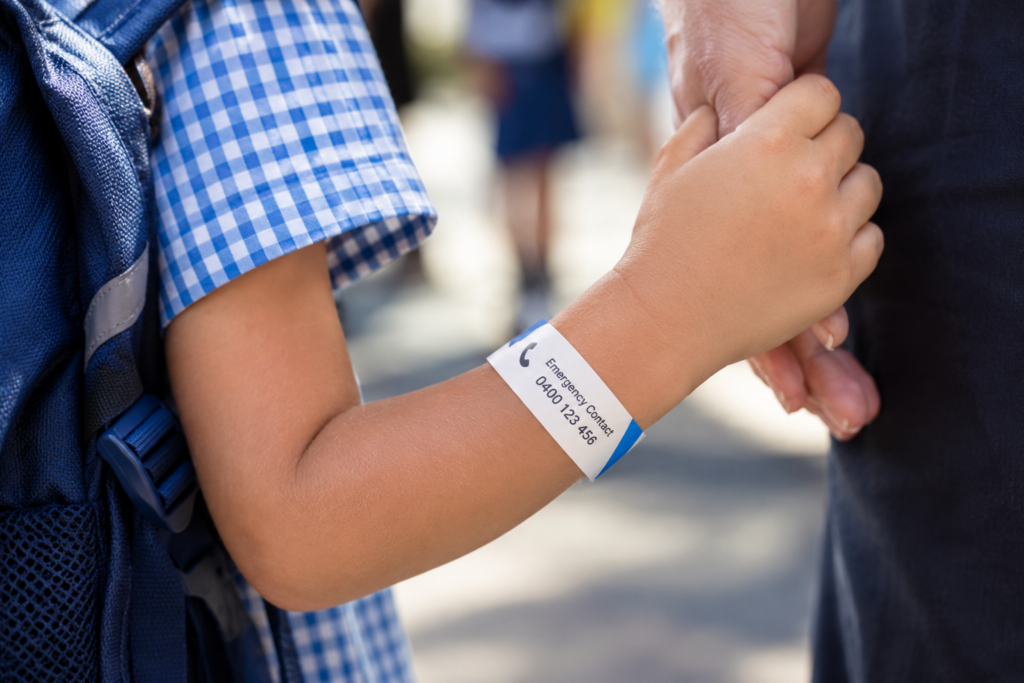
Child safety wristbands can display allergy alerts, medical conditions, medication requirements, emergency contacts and QR-linked support information.
| Type of Wristband | Example Information |
|---|---|
| Basic Event Wristband |
|
| Excursion Wristband |
|
| Medical Wristband |
|
| QR Enabled Wristband |
|
Medical wristbands improve emergency response for children by displaying medical information, allergy alerts, emergency contacts and identification details that help teachers, carers, and first aid officers act quickly.
Healthcare providers can use the same visible identification principles to communicate approved medical alerts and emergency contact details when children are moving between care environments.
Allergy alerts, medical conditions and emergency contact details are important because they help supervising adults identify risks, contact the appropriate person and follow established emergency procedures.
Depending on the situation, a child’s wristband may include:
If a child wearing a wristband marked “Severe peanut allergy” develops symptoms during camp, staff can recognise the warning, alert the supervising adult, follow the existing emergency action plan and contact emergency services where appropriate.
The wristband does not replace staff training, prescribed medication, emergency action plans or professional medical assessment. It simply makes relevant information easier to recognise when time matters.
QR code wristbands improve medical communication by providing authorised or appropriately controlled access to emergency contacts, relevant medical details and approved support instructions without printing every detail on the wristband.
Privacy should guide how these systems are implemented, so schools and organisers should obtain appropriate parent or guardian consent, limit information displayed publicly and establish who can access linked records.
Digital access should also improve, rather than replace, existing emergency procedures. A clearly printed contact number remains useful if mobile reception is unavailable or a phone battery runs flat.
Child safety wristbands strengthen lost child prevention and event supervision by displaying identification details, emergency contacts or group information that help staff respond quickly when children become separated.
Child safety wristbands support faster identification and reunification when a child becomes separated at a public event. In busy festivals, sporting events or recreational venues, visible contact or group information gives staff a clear starting point.
Emergency contact details give staff a reliable way to contact a parent, carer or event team. For example, if a young child at an agricultural show cannot remember a parent’s number, staff can use the wristband to make contact and follow the event’s reunification procedure.
QR codes and variable data can give each child a unique identifier or controlled link to approved information, supporting accurate reunification without publicly displaying sensitive details.
Colour-coded wristbands also aid crowd management and group supervision, and organisers can assign different colours to:
The colour itself does not need to disclose personal or medical information. Its purpose is to help authorised staff quickly identify the appropriate group.
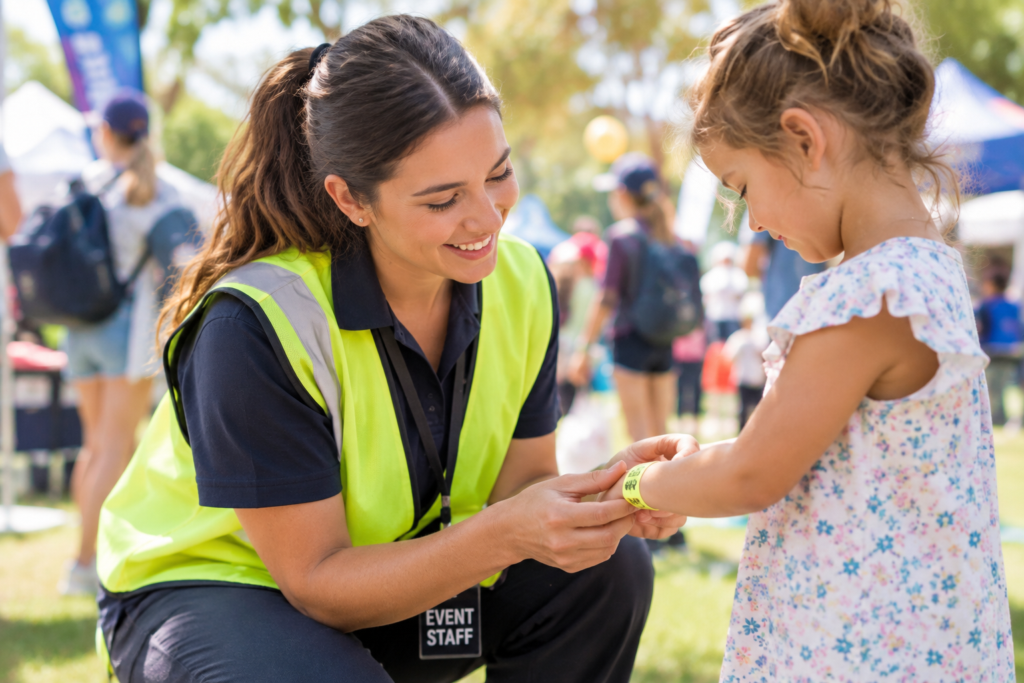
School excursion and camp wristbands strengthen supervision and duty of care by helping staff identify students, organise groups, manage attendance and respond quickly during off-campus activities.
School excursions often involve multiple transitions throughout the day, with students moving between buses, public venues, meal areas and activity stations while supervised by different teachers or volunteers.
Each transition creates an opportunity for confusion, particularly when several schools visit the same location.
Student identification wristbands help supervising adults recognise their assigned groups and identify children who may have moved away from the correct area.
Schools can use wristbands to display:
Colour-coded excursion wristbands are particularly helpful when students are divided into smaller groups.
For example, a school visiting a museum might issue blue wristbands to one class, green wristbands to another and yellow wristbands to students participating in a separate workshop.
Teachers can recognise their groups more easily during headcounts, lunch breaks and transport transitions.
Add emergency contacts or a unique QR code to wristbands so staff can recognise at a glance.
During an emergency evacuation, teachers still need their attendance records and established roll-call procedures. Wristbands add another visual reference that helps identify students quickly when groups have become mixed.
At the end of an excursion, bus-specific colours or printed identifiers can also help staff direct students to the correct transport group.
School camps benefit from similar systems. A multi-day camp might use different wristband colours for cabins, activity groups or designated staff contacts.
QR code wristbands can facilitate operational coordination by linking to approved excursion records, emergency contact details or relevant student support information.
Again, digital identification should remain part of a broader supervision plan rather than a substitute for attendance checks, staffing requirements and emergency procedures.
Schools considering broader identification systems can also explore how lanyards support safer and more organised education environments. Wristbands and lanyards can work together, with wristbands often better suited to younger children, physical activities or situations where hands-free identification is useful.
Accessibility wristbands improve inclusion and neurodivergent support by communicating relevant sensory needs, preferred communication methods or care instructions to authorised carers and event staff.
When choosing accessibility wristbands, schools and organisers should consider individual sensory preferences because some neurodivergent children may be uncomfortable wearing anything on their wrists, making comfortable and sensory-friendly materials particularly important for inclusive participation.
Accessibility wristbands support neurodivergent children during excursions and events by communicating sensory needs, preferred communication methods and carer contact details to authorised staff. Children with autism, sensory sensitivities, communication differences or behavioural care needs may require additional assistance in unfamiliar or crowded environments.
A busy festival, noisy sporting venue or unexpected change during a school excursion can create stress, particularly when the adults tending to the situation do not know the child’s usual support strategies.
An accessibility wristband can communicate simple, practical information, such as:
These messages should always reflect the child’s needs and the preferences of their parent, guardian or support team.
Some families may prefer a discreet symbol, a colour recognised by trained staff or a QR code linking to a private care profile instead of a publicly visible description.
For example, a child attending a community event may become distressed by amplified music and move away from their group. An accessibility wristband reading “Please speak calmly and call my carer” gives staff immediate guidance without requiring the child to explain their situation.
QR code wristbands can improve behaviour support and emergency communication by giving authorised staff additional information such as support instructions, communication preferences and emergency contacts, which can be protected or access-controlled depending on the system used.
With appropriate consent and privacy controls, a digital profile might include:
However, accessibility wristbands should never be used to label, stigmatise or publicly disclose a child’s diagnosis.
Organisers should consult families before introducing identifiable colour codes or messages. Staff should also understand what each code means and how to respond respectfully.
Sensory-friendly wristband materials matter because uncomfortable textures, rough edges or restrictive fastenings can make a child unwilling or unable to wear an identification wristband.
Soft silicone, smooth fabric and correctly fitted bands may be more comfortable for children with sensory sensitivities.
Before an excursion or event, parents and carers can trial different materials to find an option that the child can tolerate.
An identification system only works if the child can wear it comfortably and the relevant adults understand how to use it.
Wristband materials influence child safety, comfort and operational reliability by determining how well identification remains readable, secure and wearable throughout an activity.
The right option depends on the event duration, activity type, weather conditions, water exposure and the individual child’s needs.
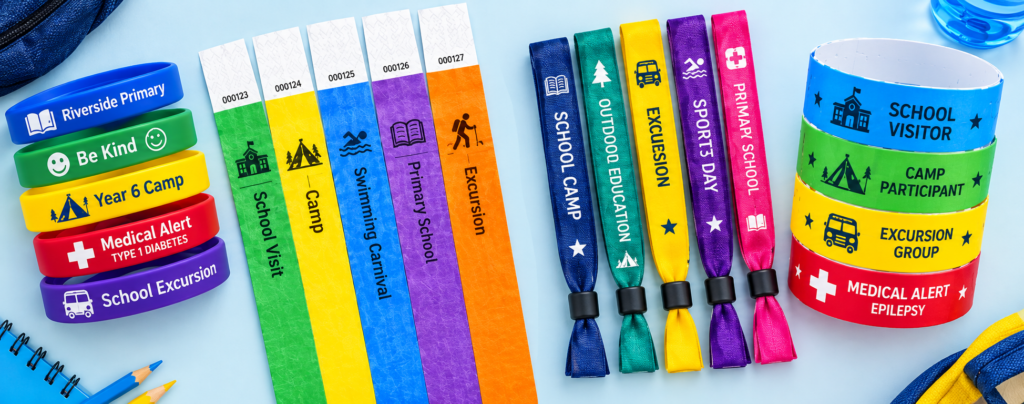
Tyvek wristbands aid short-term child identification by providing lightweight, practical and cost-effective wristbands for school excursions, festivals and single-day activities.
Tyvek wristbands are useful for:
Their adhesive closures can provide tamper-evident security, making it easier to recognise when a band has been removed or interfered with.
Tyvek is generally water-resistant, but performance depends on the specific wristband, adhesive and printing method. Organisers should check product specifications before relying on any wristband for extended swimming or prolonged water exposure.
Silicone wristbands support reusable medical identification by providing a flexible, durable option for children who regularly need visible allergy alerts or emergency information.
They are often suitable for:
A child with a diagnosed allergy, for example, might wear a reusable silicone wristband that identifies the allergy and directs adults to notify a carer.
Silicone wristbands should fit properly and remain easy to read. Families should also confirm that a reusable wristband still reflects current emergency contacts and medical information.
Need a wearable medical alert that can be worn repeatedly? Explore soft, custom printed durable silicone wristbands.
Fabric wristbands provide multi-day child identification by offering comfortable, durable wear throughout camps, festivals and extended outdoor education programs.
They are commonly considered for:
Soft fabric can feel more comfortable over several days, particularly when children are participating in physical activities.
Depending on their construction, fabric wristbands may incorporate printed identifiers, adjustable closures or tamper-resistant fittings.
Organisers should consider whether the material dries comfortably after water exposure and whether the closure can be removed safely if necessary.
Waterproof wristbands support child safety during aquatic activities by maintaining identification details when wristbands are exposed to swimming, splashing or wet weather.
They may be appropriate for:
Not every wristband marketed as water-resistant will perform equally well during prolonged immersion. Schools and organisers should check the product’s material, closure and print durability before selecting bands for aquatic use.
For example, a school attending a swimming carnival may require wristbands that remain readable throughout pool activities while still displaying the correct house colour or emergency contact details.
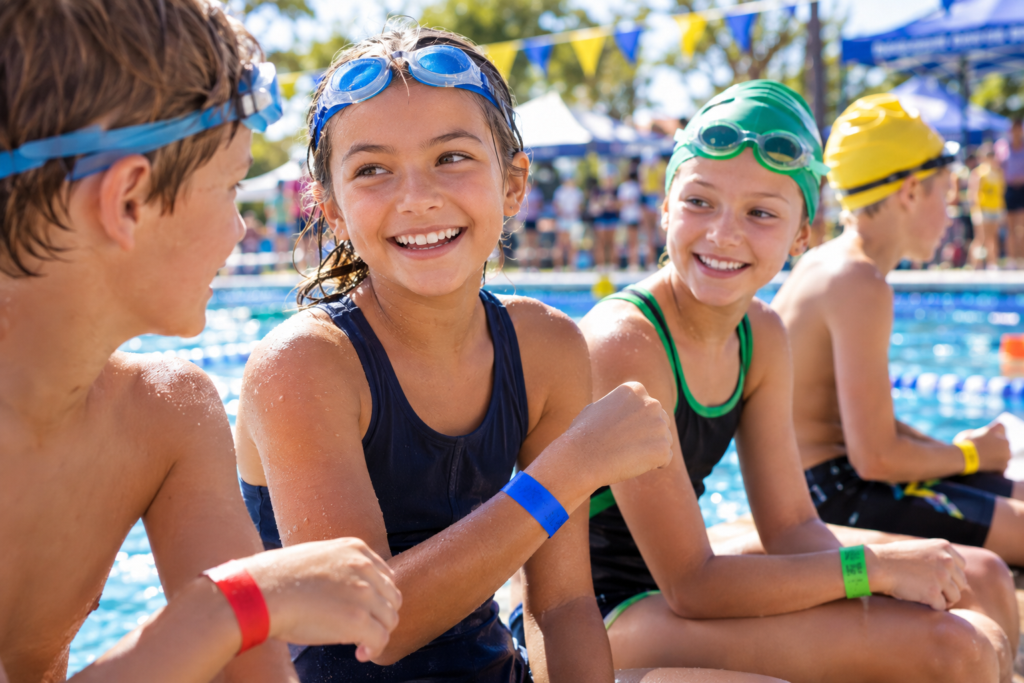
Schools and organisers should choose wristbands by assessing activity duration, medical needs, water exposure, accessibility requirements, privacy considerations and the level of identification required.
Helpful questions include:
For short school excursions, Tyvek wristbands may offer a practical solution. Multi-day camps may benefit from comfortable fabric bands, while reusable silicone options can suit ongoing medical identification.
Whatever the material, the wristband should remain legible, fit properly, and align with the organisation’s existing safety procedures.
Emergency information wristbands strengthen child safety, supervision, and emergency preparedness by providing accessible medical alerts, emergency contacts, and identification details during school activities, camps, and public events.
For teachers, first aid officers, and event organisers, wristbands provide immediate information when a child becomes unwell, is separated from their group, or cannot explain their needs.
For schools, colour-coded bands and student identification systems enhance group coordination, transport transitions and emergency roll calls.
For neurodivergent children and children with communication differences, accessibility wristbands can provide respectful guidance that helps staff respond calmly and appropriately.
Material selection also matters because Tyvek, silicone, fabric and waterproof wristbands offer different advantages depending on activity duration, environmental conditions and the child’s comfort.
Most importantly, wristbands work best as part of a broader safety plan that includes trained staff, accurate attendance records, appropriate consent, clear emergency procedures and reliable parent or carer contact information.
With the right design and information, a simple wristband can improve communication and supervision while providing greater peace of mind for the adults responsible for keeping children safe.
To discuss your specific needs, contact The Wristband Co. today. You can reach our team at 08 8363 4850 or via email at [email protected].
Need help choosing wristbands for your school, camp or event? Our team can recommend the right option for your child safety needs.