Blog The Technology Behind LED Wristbands: Small Bands, Big Impact
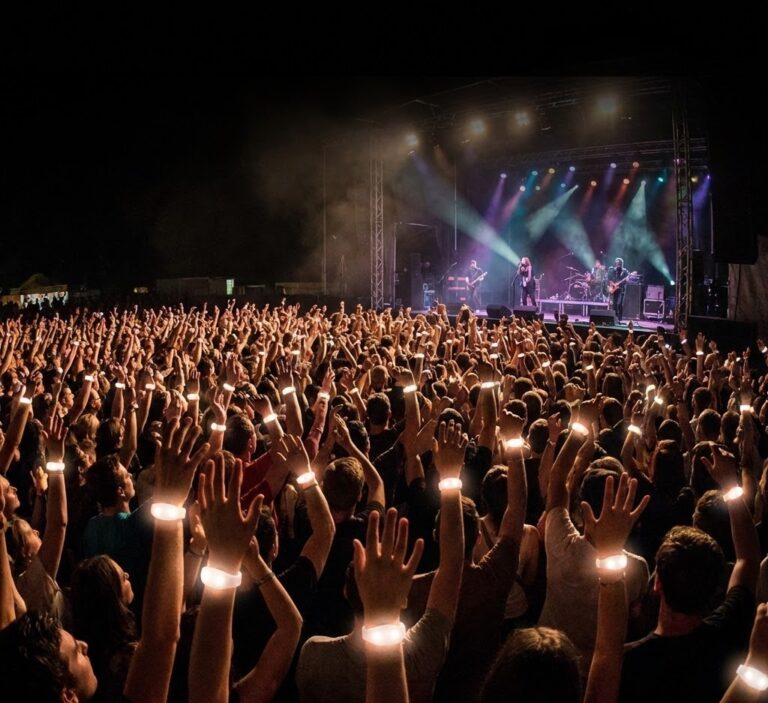
LED wristbands combine light-emitting diodes (LEDs) with embedded control systems to deliver dynamic visual effects and interactive experiences for events, branding, and engagement, while balancing power, comfort, and durability.
They have become a popular way to transform crowds into part of the experience at concerts, sporting events, festivals, charity runs, and corporate activations. From simple flashing wristbands for smaller gatherings to fully synchronised DMX-controlled displays in large stadiums, these wearable lights create memorable moments that audiences genuinely remember.
Understanding how they work reveals two distinct categories: Basic models use simple physical switches for individual enjoyment. Conversely, advanced DMX LED wristbands receive wireless signals from centralised lighting control systems. This specific event technology allows organisers to produce massive synchronised effects across an entire crowd.
DMX controllers are vital because they seamlessly link this wearable technology to your broader event lighting systems. Read on to explore the hardware, power management, and practical benefits behind this synchronised lighting technology.
LED wristbands combine embedded diodes, microcontrollers, and power systems to convert electrical energy into visual lighting effects for engagement and events. Knowing exactly how these devices work starts with looking inside the plastic casing.
At their core, these devices function as miniature computers designed for wearable lighting. While they may look simple on the surface, there is far more happening beneath the casing than most people realise. The technology relies on precise electrical interactions. A small battery serves as the power system, sending electricity through a flexible printed circuit board. This board houses the microcontrollers, which act as the brain of the entire device.
When these embedded systems activate, the programmed control logic dictates exactly how much electricity flows to the LEDs. Modern designs typically use highly efficient, surface-mounted bulbs containing red, green, and blue elements.
By rapidly adjusting the power levels sent to these three individual colours, the internal processor mixes them to create almost any shade in the visible spectrum. This level of control allows the band to execute complex interactive functions, such as rapid strobing or smooth colour fading.
Across Australia, we regularly see LED wristbands used to energise live concerts, school events, sporting matches, fundraising events, and branded activations where organisers want audiences to feel actively involved in the show rather than simply watching it. Understanding this baseline functionality is highly practical for event planners. Knowing how the internal components process electrical signals helps you grasp exactly how these individual devices scale up to receive wireless commands and create massive, synchronised crowd experiences.
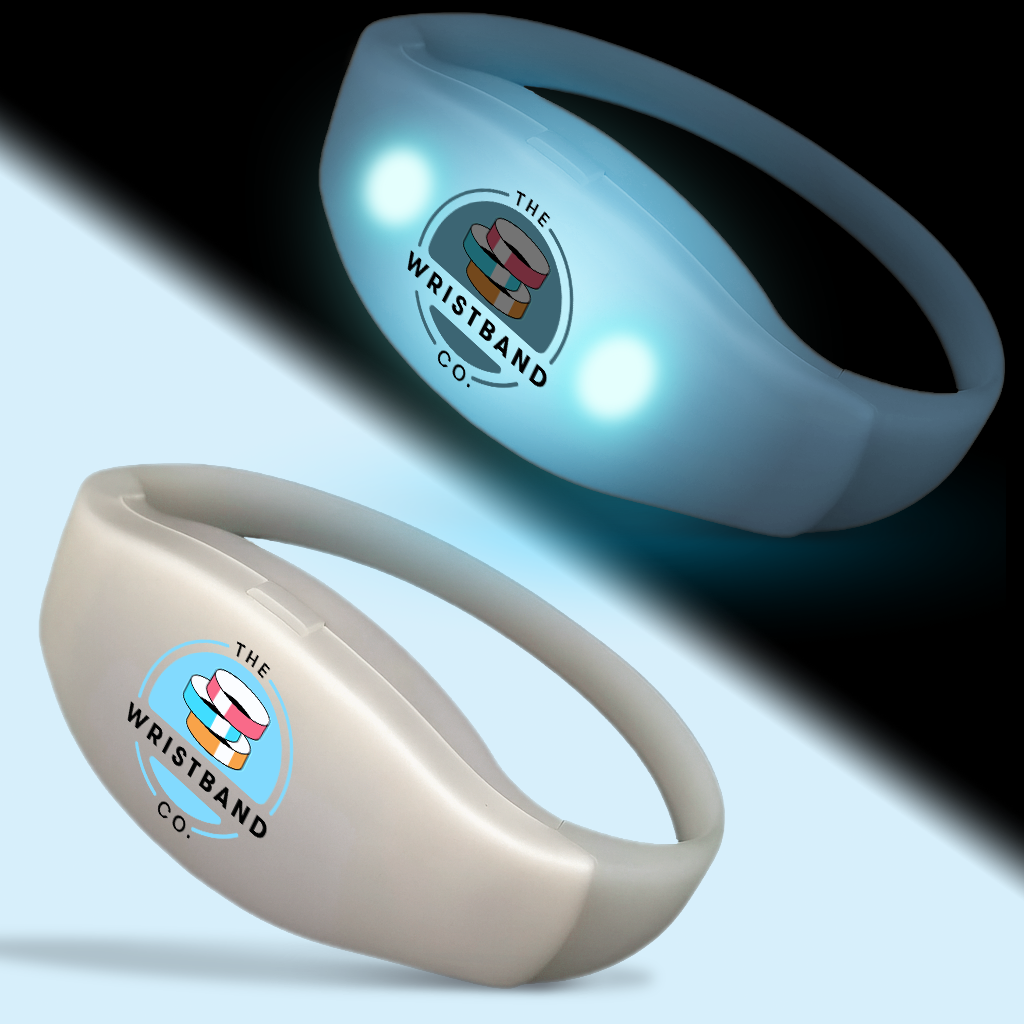
Internal components consist of light-emitting diodes (LEDs), microcontrollers, compact power systems, and interactive sensors that cooperate to produce dynamic visual effects. Looking inside the casing reveals the hardware that enables these devices to function reliably.
The most visible parts are the bright LED components themselves. However, these small bulbs cannot operate without advanced embedded controller technology. Inside each wristband is a small control system that manages how the lights behave, including colour changes, flashing patterns, and brightness levels. This allows organisers to create everything from subtle lighting effects to large-scale crowd synchronisation.
Driving these intense lights requires a highly efficient battery and power management. Power systems are critical in wristband design because they must balance energy output with a lightweight form factor. Most modern event models use small lithium coin batteries to provide hours of continuous illumination without making the band heavy or uncomfortable for the wearer to use all night.
Many advanced models also feature built-in sensors to boost audience engagement. Small motion accelerometers act as the primary interactive elements within the casing. These interactive mechanisms allow the lights to react directly to physical movement, creating rippling light effects when a crowd waves their hands to the music.
Finally, the hardware relies on firmware control to execute its functions. These software systems dictate the underlying rules for how the band behaves and responds to commands. The programmed control logic ensures the lighting timing remains perfectly synchronised across thousands of individual units, directly influencing the overall reliability and visual capability during a live show.
DMX controllers utilise radio frequencies, centralised command structures, and wireless signal distribution to synchronise massive groups of LED wristbands during live events. In a DMX setup, these transmitters act as the main brain for the entire crowd. Rather than connecting to each band individually, centralised control systems broadcast a single universal command over a specific radio frequency.
This broadcast method explains why event production teams prefer it over standard Bluetooth for large audiences. Bluetooth requires a direct, paired connection with every single device, which simply fails when managing thousands of people. Instead, a DMX 433 controller sends a long-range radio signal that every active band receives simultaneously. In practice, this is what allows entire stadiums to light up in perfect unison, without the delays you would expect from standard wireless connections.
Planners use DMX zones to create complex, group-based lighting effects across the venue. By assigning different radio channels to different seating sections, operators can easily execute highly specific zone-based control. This allows organisers to create crowd-wide moments that feel fully immersive, for example, lighting up different seating sections in coordinated colours during a concert finale, sports team entrances, or a hyped countdown moment.
To achieve this level of seamless immersion, DMX-controlled wristbands integrate directly with the main event lighting systems. The lighting technician connects the wristband transmitter straight into their primary control board. This ensures the wearable lights become a direct extension of the stage lighting. When the main stage lights change to match the music, this centralised control forces the LED wristbands to react in perfect harmony, delivering unforgettable synchronised audience lighting for every attendee.
At The Wristband Co., we often help event organisers determine whether standard LED wristbands or DMX-controlled options are better suited to their audience size, venue setup, and overall event goals. Smaller community events may only need simple manual wristbands, while larger productions often benefit from fully synchronised lighting effects.
LED wristband materials combine flexible silicone, adjustable fasteners, and moisture-resistant casings to deliver lasting comfort and reliability during extended events. When selecting materials, manufacturers heavily prioritise skin-friendly designs. Because attendees wear them for several hours, rigid plastics can quickly become irritating.
Instead, premium models use hypoallergenic, medical-grade silicone or smooth woven fabrics. These materials sit comfortably against the wrist, preventing chafing even during movement or perspiration. Beyond the base material, ergonomic design plays a massive role in the overall physical experience.
The best comfort features include secure, adjustable straps that easily accommodate any wrist size. This ergonomic design ensures the band stays firmly in place without feeling restrictive. Comfortable wearables increase the likelihood that guests keep them on for the entire event, which is essential for maintaining the overall visual impact. After all, even the most advanced technology loses its impact if people stop wearing it halfway through the event.
Because live events present harsh physical environments, designers must incorporate specific durability enhancements. High-quality construction focuses heavily on wear resistance and physical protection. Most durable LED bands feature a protective seal over the battery housing and microcontrollers.
This specific durability protects the internal electronics against sudden rain showers, spilled drinks, and heavy perspiration. By preventing water ingress, manufacturers stop the devices from short-circuiting midway through a performance.
Ultimately, these physical design choices directly influence overall user satisfaction. When organisers invest in proper materials and careful construction, they eliminate physical distractions for their guests. A band that fits perfectly and withstands the physical demands of a crowded festival ensures that the technology actively enhances the live experience.

Centralised programming utilises master transmitters, DMX control software, and programmed logic to orchestrate synchronised visual effects across thousands of LED wristbands, whilst standard models do not require any programming.
These basic units rely entirely on simple physical switches for manual activation. The user decides when to turn the light on and off. Because they lack internal wireless receivers, these standard bands cannot participate in coordinated event lighting sequences.
Conversely, DMX-controlled LED wristbands operate entirely through a master transmitter. Rather than relying on individual user interaction, these devices receive continuous wireless instructions from a central lighting desk. This centralised lighting control ensures every single attendee experiences the exact same visual cues at the exact same millisecond.
Producing these massive crowd displays requires specific DMX programming. Lighting technicians use advanced software to build complex shows ahead of time. This software allows operators to map out the physical arena and assign specific control logic to different seating zones.
Through the power of centralised programming, production teams can trigger sweeping colour changes, rhythmic strobing, and cascading light patterns that flow seamlessly across the stadium, without the risk of human error.
One of the biggest advantages of DMX-controlled wristbands is that attendees do not need to do anything themselves. Once distributed, the lighting sequences are fully controlled by the event production team, helping create seamless experiences without relying on audience interaction.
These centralised effects create an immersive environment that manual activation could never achieve. By integrating the visual effects directly with the main stage lighting, organisers guarantee a truly spectacular experience for the entire audience.
LED wristbands utilise audience engagement technology to transform standard live gatherings into highly immersive visual displays. Planners frequently deploy these interactive devices at major music concerts, multi-day festivals, and large-scale brand activations. By handing every guest their own wearable light, organisers instantly turn passive spectators into an active part of the show. These wearables help audiences feel directly connected to the performance.
These immersion tools work perfectly for massive stadium crowds. When deployed at sporting events, they unify the crowd and build incredible energy during pre-game ceremonies. Similarly, concert wristbands create stunning synchronised light shows that pulse exactly to the beat of the live music. They represent one of the most effective crowd engagement techniques available.
These devices go far beyond just simple flashing lights. Planners use them at festivals and brand activations to map out complex seating patterns and highlight specific moments in the schedule. This specific wearable technology provides incredible flexibility for any production team. For a detailed look at creative concert light show wristbands and festival engagement technology, explore our dedicated guide on unforgettable event ideas.
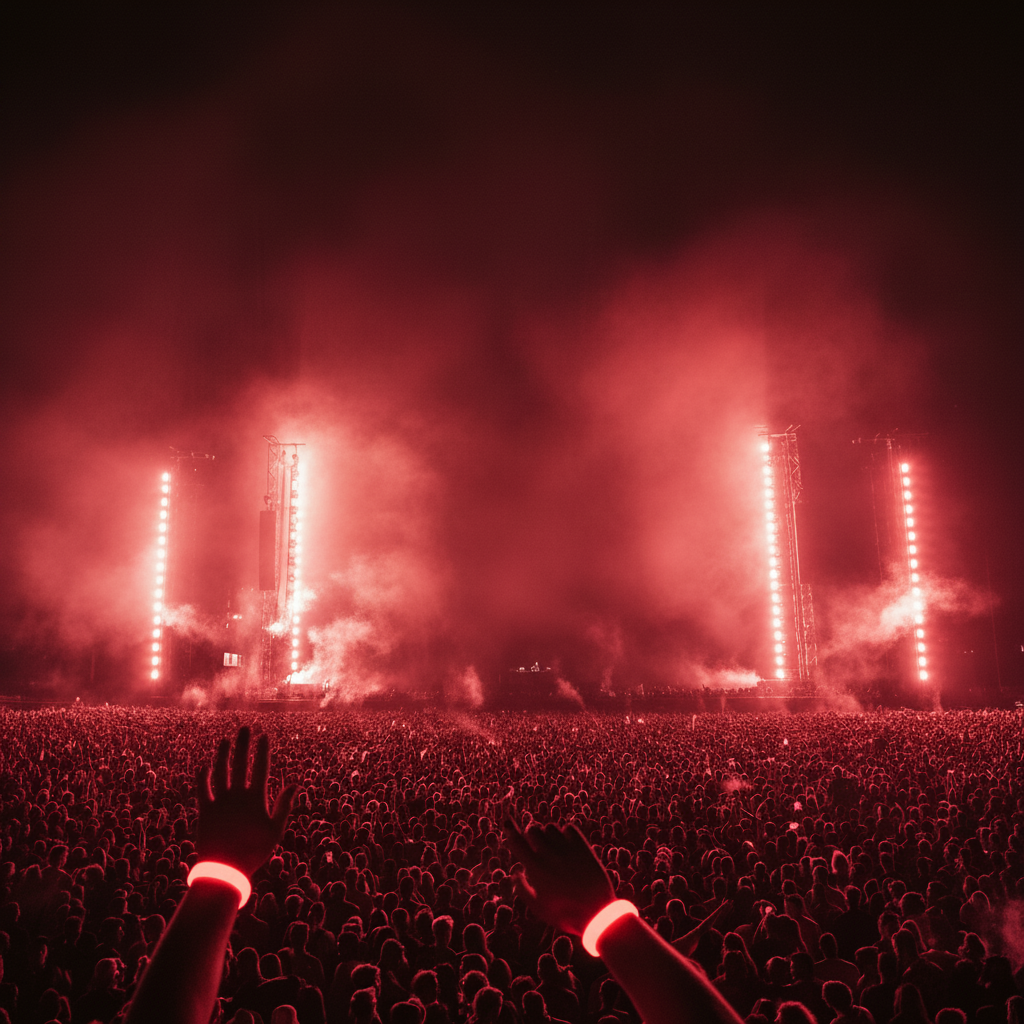
The Wristband Co. provides two distinct LED wristband types to suit different crowd sizes and visual requirements. Planners can choose between standard manual models and advanced DMX event wristbands. Our LED wristband range supports everything from local school functions and charity fundraisers through to major concerts, sporting events, and large-scale corporate activations across Australia.
Standard models operate using a simple physical switch. These are excellent options for smaller gatherings where guests control their own lights. Conversely, DMX-controlled wristbands receive wireless signals from a central lighting desk. This makes them the perfect choice for planners who want to create synchronised effects across a large audience.
Choosing the right technology depends on the size of your event and desired visual impact. Both of these options can be fully personalised with your unique branding. By providing custom options Australia-wide, we allow organisers to print sponsor logos and event details directly onto the strap.
This overview simply highlights the practical differences between our products. For a complete breakdown of battery life, control ranges, and detailed product specifications, buyers should visit our main product page. You can review all the technical details there to ensure you select the best LED wristbands from The Wristband Co. for your upcoming event.
Symbolic features provide discreet communication of needs while respecting attendee privacy. Symbolic wristbands incorporate icons representing accessibility requirements, such as wheelchair symbols indicating mobility needs, while sunflower designs signal hidden disabilities.
These identity markers enable inclusive recognition without requiring detailed explanations, fostering dignity and community connection through shared symbolic design.
Standard LED wristbands offer simple manual controls for smaller gatherings. In contrast, DMX-controlled LED wristbands receive wireless commands from centralised lighting systems. This fundamental difference determines how the technology functions in real-world applications.
Planners must decide which technology suits their specific environment. When managing massive crowds, DMX controllers are absolutely critical. These transmitters broadcast radio signals that trigger synchronised lighting effects across the entire venue.
This level of control ensures every attendee experiences the same visual cues without lag. By integrating these wearable solutions with your main stage lights, you deliver unforgettable synchronised audience lighting.
Understanding this technology helps organisers make informed choices about power, comfort, and control. Selecting the right hardware transforms passive spectators into an active part of the live show. Whether you need basic wristbands for events or advanced DMX models, getting the right equipment guarantees a successful outcome.
If you are planning an upcoming event and want advice on the right LED wristband solution for your audience, our team can help you choose the best option based on your venue, crowd size, and visual goals.
You can reach our team at 08 8363 4850 or via email at [email protected] to determine which LED wristbands fit your exact event requirements.