
Blog Smart Wristbands and RFID/NFC ID Cards: The Future of Seamless Access and Payment Systems

Smart wristbands and RFID/NFC-enabled ID cards are shaping the future of access and payments by enabling fast, secure identification and contactless transactions across events, workplaces, healthcare environments, and public spaces. While lanyards continue to play an important role, they function as holders for smart RFID/NFC ID cards.
In recent years, organisations have moved away from simple printed passes and static badge holders toward smart wristbands and RFID/NFC cards that integrate seamlessly with digital access and payment systems. These smart credentials can be worn directly on the wrist or housed within a lanyard, offering flexibility without compromising functionality.
From streamlining entry at corporate offices and high-security zones to facilitating cashless transactions at large-scale events and theme parks, these smart systems are becoming essential infrastructure. Their adoption also supports sustainability goals by reducing paper-based tickets and disposable passes, while offering inclusive, hands-free authentication options for diverse user groups.

Smart wristbands and RFID/NFC-enabled ID cards rely on several core technologies that enable secure identification, payments, and data collection across industries. These technologies include NFC (Near-Field Communication), RFID (Radio-Frequency Identification), QR codes, and IoT (Internet of Things).
NFC enables short-range communication between a credential and a reader. Depending on the chip type and system design, communication can be secured using encryption and authentication protocols. It is commonly used for contactless payments, secure access control, and identity verification, making it ideal for close-proximity interactions such as tapping into venues or making purchases.
RFID technology is widely used for access control, ticketing, tracking, and identification. RFID-enabled cards or wristbands communicate with readers via radio waves, allowing for rapid authentication, movement tracking, and streamlined entry through key checkpoints. Unlike NFC, RFID can support longer-range detection depending on the system setup.
Static QR codes offer lower security than chip-based credentials, although dynamic or cryptographically signed QR systems can provide stronger protection.
When combined with NFC or RFID systems, IoT connectivity allows data collected from wristbands and ID cards to sync with cloud-based platforms. This enables real-time insights, reporting, and system integration across access control, payments, and analytics platforms.
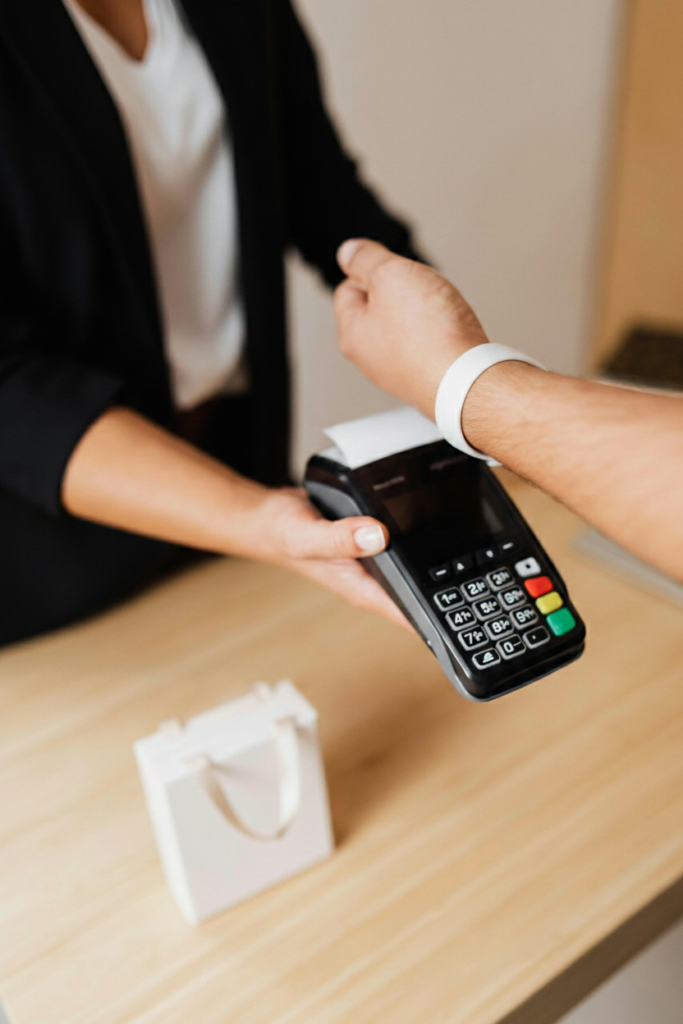
Smart wristbands and RFID/NFC ID cards are rapidly becoming the standard for cashless payments in high-traffic environments. By embedding secure chips within wristbands or ID cards (often worn on lanyards), users can complete transactions quickly without the need for cash, physical cards, or mobile phones.
These systems integrate with point-of-sale terminals, mobile wallets, and backend payment platforms to deliver fast, frictionless transactions. Encrypted NFC payments are processed in seconds, reducing queues and improving customer flow at events, transport hubs, and retail environments.
Security is reinforced through tokenisation, encrypted credentials, and backend verification systems, ensuring sensitive payment data is protected. This combination of speed and trust is a major driver behind the widespread adoption of wearable and card-based payment systems.
Smart wristbands and RFID/NFC ID cards are no longer limited to major events. Their versatility has led to widespread adoption across multiple sectors.
For example, the healthcare industry is utilising these wearables for patient identification and security, and allows for efficiency in healthcare, as well as helping with patient and healthcare worker convenience.
Unsurprisingly, the events sector has been transformed by smart wristbands and RFID/NFC ID cards that serve many purposes, such as ticketing and access control, cashless payments, and attendance tracking.
Beyond this, government services, educational institutes and transport networks have adopted this technology. Whether it be for library access, restricted entrance into government buildings, or ticketing onto public transport, their applications are widespread.
Smart wristbands play a critical role in modern healthcare environments, by helping to reduce patient errors and are used in healthcare monitoring.
These wristbands can be scanned and show a patient’s record, along with their ID, any contraindicated medications, or medical alerts. This helps reduce medication errors and accidental patient misidentification, especially in high-risk populations.
In some advanced implementations using sensor-enabled wearables, vital monitoring may be integrated, which is fed into a medical alert system, and can trigger warnings to staff if their vitals indicate patient deterioration. This is often valuable in elder care technology and helps monitor high-risk patients.
RFID/NFC staff ID cards worn on lanyards further support hospital security by controlling access to medication rooms, operating theatres, and restricted zones, while maintaining detailed access logs.
Smart wristbands have become the dominant credential at festivals and large entertainment venues. They have largely replaced paper tickets by offering a more secure, durable, and efficient solution.
Once inside a venue, the same wristband can be used for cashless payments, reducing transaction times and increasing vendor revenue. RFID/NFC-enabled ID cards worn on lanyards are often used for staff, contractors, and VIPs, ensuring clear identification and controlled access.
These smart credentials can support movement analytics or zone-based tracking, depending on system design and can issue emergency alerts when needed. These wearables also boost fan engagement by enabling interactive experiences, such as real-time updates, gamified challenges, and rewards keep attendees connected and actively involved throughout the event. This helps to create a safer, more interactive and streamlined event.
In corporate and industrial environments, RFID/NFC ID cards worn on lanyards are the primary tool for employee identification and access control. They enable secure entry to buildings, restricted areas, and shared resources.
The wearables can be used for workplace payments at cafeterias, vending machines, and in-house stores. This allows easier invoicing and often uses preloaded budgets on wristbands.
In the workplace, it can support attendance logging or facility usage analytics, where appropriate and compliant with privacy policies.
Beyond security and operational uses, they can also be used as part of employee wellness programs. They can track activity, provide insights and gamify challenges to encourage healthier habits and staff team building.
Sustainability is an important consideration in the production of smart wristbands and RFID/NFC ID cards, as it addresses the waste produced by large events and corporate entities. Using lower-waste materials and reusable credential formats can help reduce reliance on disposable paper systems, drastically reduce waste products, and thus protect the environment.
The move towards greener solutions, such as wristbands over paper stickers, emphasises the ethical production industry push. Brands are increasingly being expected to ensure they uphold sustainable practices, and consumers are becoming more aware of the ethics of purchasing one-use products.
For more information on this, read up on The Wristband Co.’s in-depth guide on eco-friendly event planning for comprehensive surgeries for planning sustainable events.
Inclusive design is a major advantage of smart wristbands and RFID/NFC ID cards. Adjustable wristbands, lightweight cards, and ergonomic lanyards ensure accessibility for children, people with disabilities, and individuals with sensory sensitivities.
Hands-free authentication removes physical and cognitive barriers associated with traditional ticketing and payment systems, ensuring equitable access for all users.
By purposely using accessible design principles, planners can ensure equitable access to a wide range of entrance ways, allow for payments and identification of all, without barriers.
We recently published a blog that explores the topic of how wearables (such as Lanyards and Wristbands) can foster greater inclusivity and improve accessibility at major events, which you can read all about here.
Smart wristbands and RFID/NFC-enabled ID cards are redefining how people access spaces and make payments. While lanyards remain an important accessory, the smart technology resides within the wristband or card itself.
Organisations that adopt wearable technology now gain a competitive advantage by improving security, accelerating transactions, and meeting rising expectations for seamless, contactless experiences.
Sustainability and inclusivity influence the adoption of smart wearable technology, as they ensure that everyone can use the technology and that it remains future-proof. Whilst sustainable reduction reduces environmental impact, adopting inclusive technology guarantees accessibility to all.
Industry adoption has spanned many sectors from the healthcare industry to corporate workplaces and, of course, the events sector. Smart wearable solutions truly are the gateway to a connected future.
To learn more about our wearable solutions, contact The Wristband Co. You can email us here: [email protected], or call: 08 8363 4850